
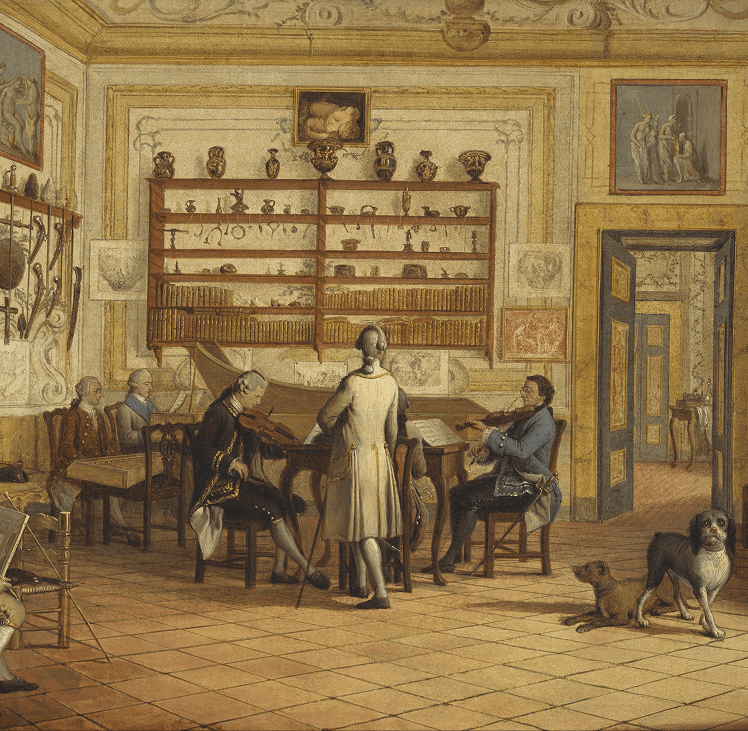
Music is not only the art of time,
it is equally the art of space.
The places where music unfolds, by activating multiple levels of perception and meaning, reveal its true essence as both art and as cultural phenomenon, while enhancing its aesthetic value. The diversity of European musical heritage and the layered histories of its cities and regions fosters a multi-level conceptual structure in which the musical cultures and historical soundscapes are inseparably intertwined with urban spaces, landscapes, architecture, visual arts, historical events, and tangible and intangible cultural artifacts.
This rich entanglement forms a virtual heritage network of values, that PlaceMUS XR addresses through dedicated tools and methodologies. The musical forms are virtually contextualised in the places using a variety of sources: recorded and live musical performances by professionals and students from European conservatories; historical chronicles, diaries, letters, and philosophical texts on music and its relationship with other arts; visual documentation of dances, ceremonies, and rituals from historical archives or contemporary recordings; and all tangible traces of musical culture still visible in today’s urban environments.
Our ambition is to create enriched, emotional and embodied experiences through scalable and adptable tools designed for diverse audiences and usage contexts. Accessibility, inclusivity and ease of use are central objectives, also for users with limited technical resources.
Tools and dataset integrate into the ECCCH, adopting the shared Knoweledge Base of the Heritage Digital Twin Ontology, and are primarily accessible online.
They can be re-used in museums installations, such as holographic showcases, immersive kiosks, video-projections, with content available via streaming or local download in low-connectivity environments.
PlaceMUS XR enables visitors to virtually visit different indoor and outdoor places and to experience musical performances in their context. Space will be explored and navigated both visually and acoustically, moving through multiple points of interest.
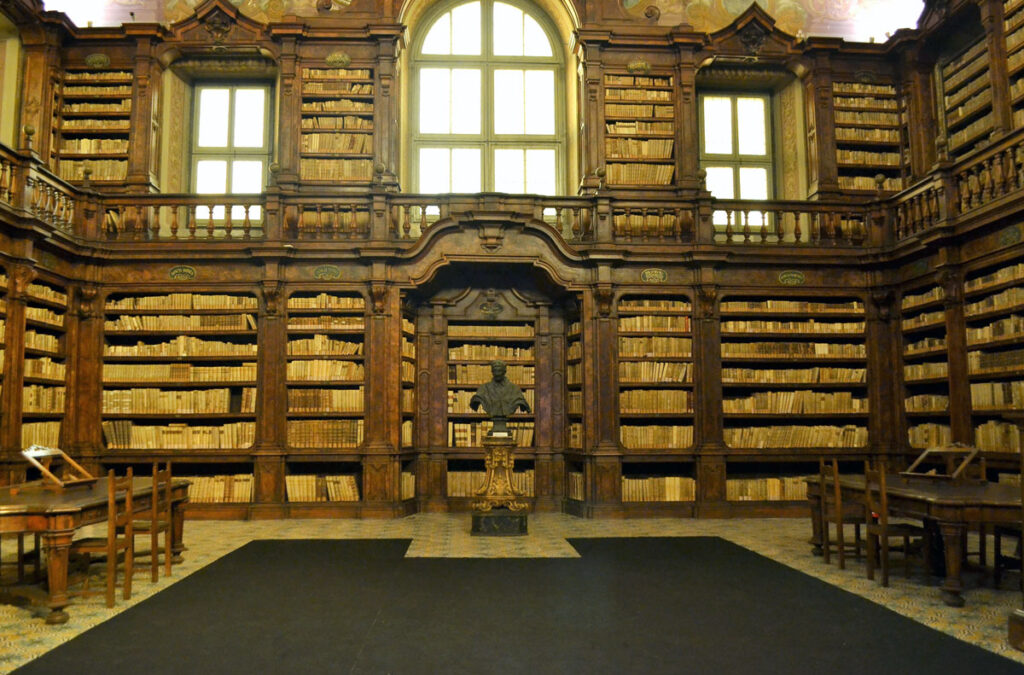
Three complementary scales structure the experience:
Territorial level
a holistic representation enables the exploration of musical itineraries through an interactive, georeferenced system combining cartography, chronography and semantic attributions, supporting comparative and analytical readings across case studies.
Site level
interactive 360° views present the pace in its current state and, where possible, through its historical reconstruction. 360° views will be enriched with temporal, sonic and three-dimensional layers.
Detailed site level
an immersive VR environment with spatialised sound allows users to experience architectural-acoustic relationships, the positioning of performers and audiences, and the emotional impact of musical settings.
Narrative content is delivered through different communication registers – documentary, narrative, evocative- imaginative, testimonial, dramaturgical – tailored to different outputs and audiences, ensuring both scientific rigour and emotional engagement.
