
On 9 June 2026, the National Archaeological Museum of Reggio Calabria hosted the second edition of “iMARS – Journey into the Future of Cultural Heritage: Smart Systems for Sustainable Monitoring, Recovery and Conservation”.
Organised by IPCF-CNR in collaboration with the Museum, and promoted by the CNR Department of Chemical Sciences and Materials Technologies within the framework of the CHrossLab activities, the event brought together researchers, academics, museum directors, professionals and companies to discuss emerging approaches to the protection and conservation of cultural heritage.
The conference provided a valuable platform for dialogue on innovation and technology transfer in the heritage sector, addressing topics such as non-invasive diagnostic technologies, smart materials for sustainable conservation, anti-counterfeiting solutions, and accessibility. Through presentations and discussions, participants explored how advanced technologies can support the preservation of cultural assets while creating new opportunities for knowledge sharing and public engagement.
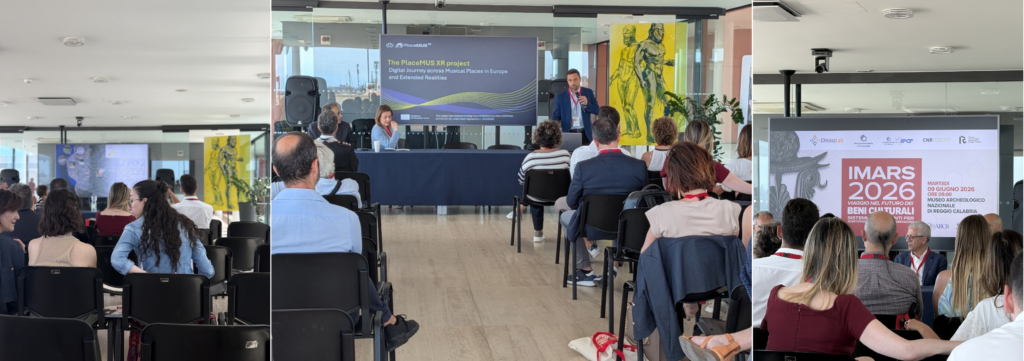
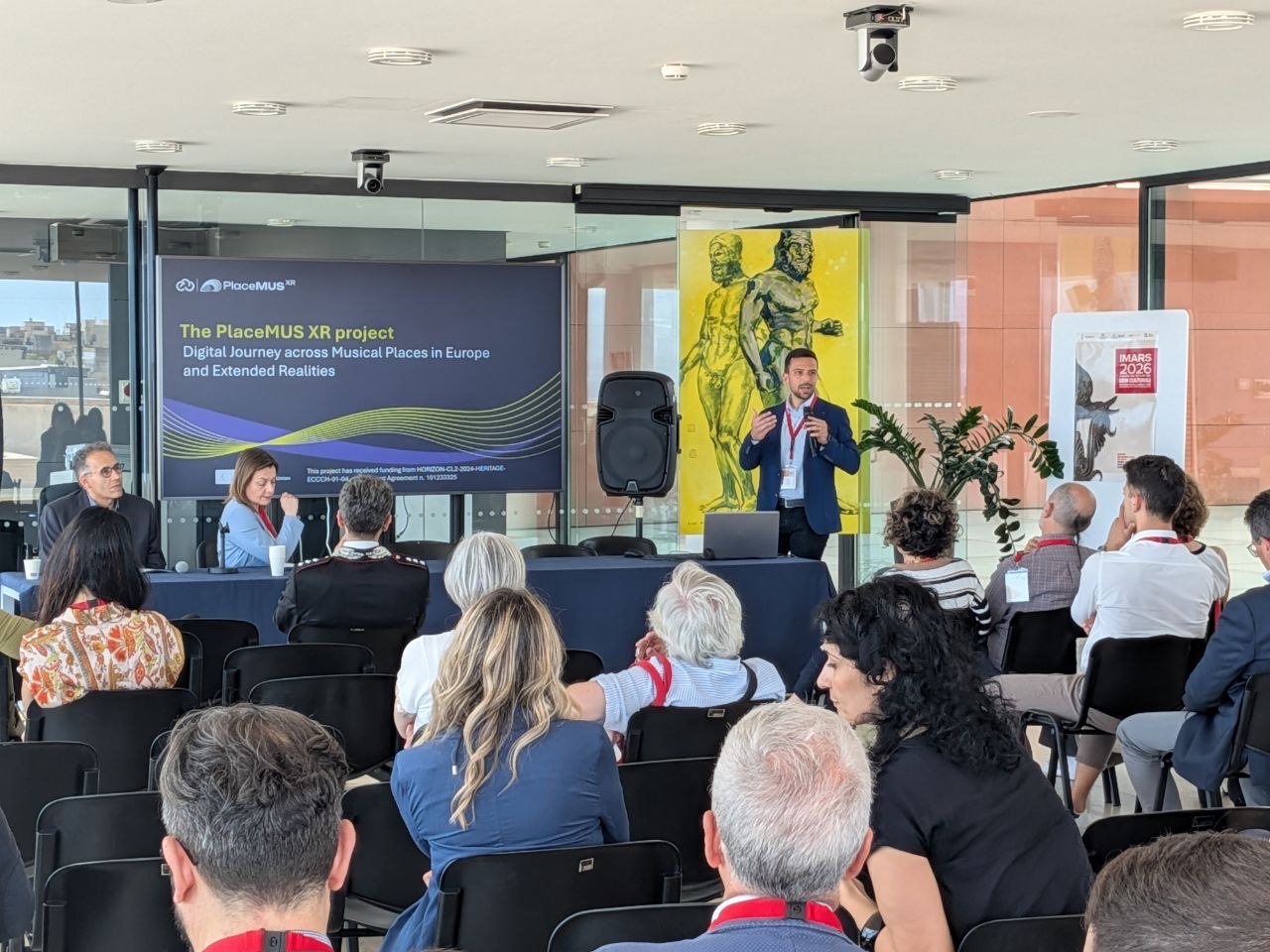
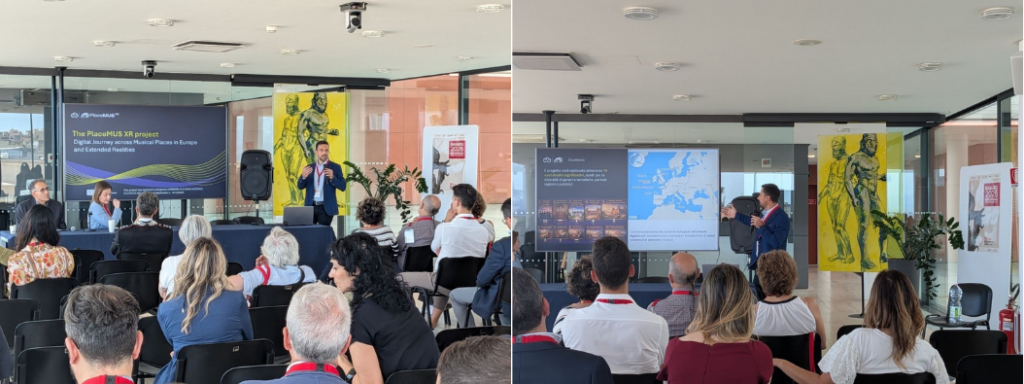
As part of the session “Digital Systems and Immersive Technologies for Cultural Heritage: Experiences and Perspectives”, Marco Cozza, CTO of 3D Research (project partner), presented PlaceMUS XR, showcasing its contribution to the development of innovative digital solutions that foster new ways of exploring and experiencing Europe’s musical heritage.
The presentation illustrated how PlaceMUS XR aligns with ongoing efforts to accelerate the digital transformation in cultural heritage by promoting more interactive, participatory and immersive experiences. Particular attention was given to the project’s approach to enabling the creation, sharing and reuse of digital content, as well as supporting the analysis and design of visitor interactions through advanced digital environments.
These aspects resonated strongly with the broader themes of iMARS, in particular the role of technological innovation in strengthening connections between cultural heritage and audiences. By leveraging Virtual and Augmented Reality alongside rich multimedia content, PlaceMUS XR contributes to the development of
user-centred experiences capable of engaging visitors on cognitive, aesthetic and emotional levels.
The project’s participation in iMARS offered an opportunity to showcase how immersive technologies can support innovation in the cultural heritage sector, fostering new forms of engagement and collaboration while contributing to the broader European discussion on the future of heritage preservation and accessibility.
